
Book Free LEV Review
0800 046 1607
Think about the last time you walked through your facility. Could you see dust hanging in the air? Did you notice workers coughing or adjusting their respirators? These aren't just minor inconveniences. Every year, thousands of UK workers develop irreversible lung diseases because airborne contaminants weren't properly controlled. Some never recover. Many can't work again.
Dust and fume extraction isn't just about ticking compliance boxes. It's about preventing someone's father, mother, or child from developing silicosis, occupational asthma, or cancer. It's about making certain the people who keep your business running can breathe safely while they work. The Control of Substances Hazardous to Health (COSHH) Regulations exist because Parliament recognized this fundamental truth: no job is worth destroying someone's lungs.
Here's what makes this challenging. Every industrial process creates different contaminants. Welding produces ultra-fine metal fumes that penetrate deep into lung tissue. Woodworking generates respirable dust that causes cancer. Concrete cutting releases crystalline silica that causes incurable disease. Each hazard demands a specific approach. A system that works perfectly in a metal fabrication shop might fail catastrophically in a joinery workshop.
This guide will walk you through everything you need to understand about effective dust and fume extraction. You'll learn how different contaminants threaten health, what COSHH actually requires, how Local Exhaust Ventilation (LEV) systems work, and why BOHS standards and HSG258 guidance matter. You'll discover how to choose the right system for your specific processes and why ongoing maintenance and professional testing aren't optional extras. By the end, you'll understand why proper extraction isn't an expense—it's an investment that protects your people, your business, and your bottom line.
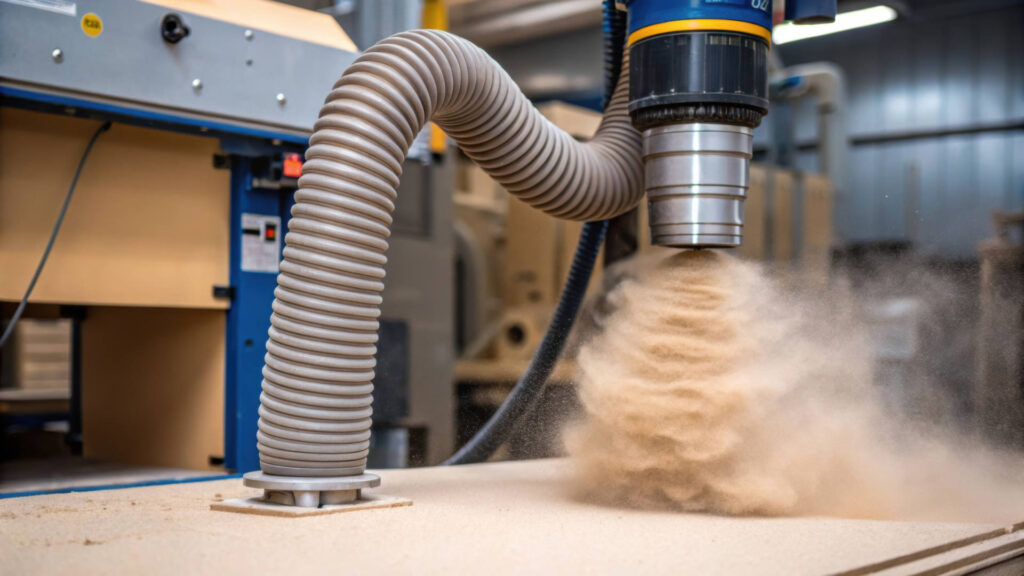
Most people think dust is just dust and fumes are just fumes. They're wrong. These airborne contaminants have fundamentally different characteristics that determine how dangerous they are and what you need to control them.
Dust consists of solid particles created when you mechanically break down materials through grinding, cutting, sanding, or crushing. When you saw wood, grind metal, or drill concrete, you're creating dust. The critical factor is particle size. Inhalable dust particles can be up to 100 micrometres in diameter. Your nose and throat trap most of these larger particles. But respirable dust particles are smaller than 10 micrometres. These invisible particles bypass your body's defences and penetrate deep into your lungs, reaching the delicate air sacs where oxygen enters your bloodstream. This is where permanent damage happens.
Fumes form through a completely different process. When you heat metal or other solids to high temperatures during welding, soldering, or laser cutting, the material vaporizes. As this vapour cools rapidly in the surrounding air, it condenses back into extremely fine solid particles—typically less than one micrometre in diameter. These sub-micron particles are smaller than most dust and can penetrate even deeper into lung tissue. They're also harder to filter effectively.
Walk into different workshops and you'll encounter specific hazards that match the work being done:
The health impacts of inadequate dust and fume control are severe and often irreversible. Chronic respiratory diseases develop gradually over years of exposure:
"Cancer risks are well-established. Silica dust, hardwood dust, and welding fumes all appear on official lists of carcinogens. Workers exposed to these substances develop lung cancer at significantly higher rates than the general population."
Acute effects can appear within hours. Metal fume fever strikes welders who inhale zinc oxide fumes, causing fever, chills, muscle aches, and nausea. Chemical exposures can cause immediate irritation, burns, or in confined spaces without proper ventilation, asphyxiation. Manganese exposure causes neurological symptoms that worsen over time, eventually resembling Parkinson's disease.
The safety hazards extend beyond health. Many organic and metal dusts are combustible. Wood dust, flour, sugar, and aluminum powder can create explosive atmospheres when suspended in air at sufficient concentrations. The dust explosion pentagon requires five elements: combustible dust as fuel, oxygen from air, an ignition source, dispersion of dust in air, and confinement. When these align, the result is catastrophic. Primary explosions dislodge accumulated dust from surfaces, creating secondary explosions that are far more destructive. Effective dust extraction prevents the accumulation that makes these disasters possible.
The Control of Substances Hazardous to Health Regulations 2002 form the legal foundation for workplace air quality control in the UK. COSHH applies to any business where hazardous substances are used or created by work activities. If your processes generate dust, fumes, mists, or vapours that could harm health, you're covered by COSHH.
COSHH requires a systematic approach built on six core steps:
The standard COSHH demands is "adequate control." This doesn't mean token efforts. It means demonstrable protection that reduces exposure to levels that won't harm health. For many substances, this means keeping exposure below the Workplace Exposure Limit (WEL). For carcinogens and substances that cause asthma, you must reduce exposure to as low as reasonably practicable—there's no safe threshold.
COSHH mandates a specific order for choosing control measures, known as the hierarchy of control. You must start at the top and only move down if higher-level controls aren't reasonably practicable:
| Control Level | Description | Example |
| Elimination | Stop using the hazardous substance or abandon the process | Discontinue a toxic chemical process entirely |
| Substitution | Replace with something safer | Switch to water-based paints instead of solvent-based |
| Engineering Controls | Physical equipment to capture contaminants (LEV) | Install extraction arms at welding stations |
| Administrative Controls | Procedures and training to limit exposure | Rotate workers to reduce individual exposure time |
| PPE | Personal protective equipment as last resort | Respirators and protective masks |
Local Exhaust Ventilation (LEV) sits at the engineering controls level. When elimination and substitution aren't viable—which is most of the time in industrial settings—LEV becomes your primary defense. Properly designed LEV systems provide collective protection. Everyone in the vicinity benefits, not just individual workers. This makes LEV far more reliable than administrative controls or personal protective equipment.
The Health and Safety Executive publishes Workplace Exposure Limits in document EH40. A WEL is the maximum concentration of an airborne substance, averaged over a specific reference period, to which workers may be exposed by inhalation.
STELs prevent acute effects like eye irritation that can occur from brief high-level exposures even when the eight-hour average is acceptable.
Your legal duty is clear. Exposure must not exceed the relevant WEL. For substances that cause cancer or asthma, you must also reduce exposure to as low as reasonably practicable, even if it's already below the WEL.
Exposure monitoring involves measuring the actual concentration of contaminants in the breathing zone of workers. This verification confirms whether your control measures, particularly your LEV systems, are working effectively. If monitoring shows exposure approaching or exceeding limits, you must take immediate action to improve controls.
HSG258, titled "Controlling airborne contaminants at work: A guide to local exhaust ventilation," is the Health and Safety Executive's comprehensive technical manual for LEV systems. Think of it as the rulebook that defines what constitutes a properly designed, installed, and maintained extraction system.
HSG258 establishes the framework of five components that every LEV system must have. It provides detailed technical specifications, calculation methods for airflow requirements, and best practice examples across different industries. When an HSE inspector assesses your extraction systems, they're checking compliance with HSG258 principles.
Professional LEV designers and installers base their work on HSG258 standards. When systems undergo Thorough Examination and Test (TExT), the testing methodology follows HSG258 guidance. The British Occupational Hygiene Society (BOHS) builds its professional qualifications, particularly the P601 certificate in LEV, directly on HSG258 principles.
Compliance with HSG258 demonstrates competence and due diligence. If an occupational disease claim arises, or the HSE investigates exposure issues, evidence that your systems were designed, installed, and maintained according to HSG258 provides strong defense. Conversely, systems that ignore HSG258 principles are indefensible.
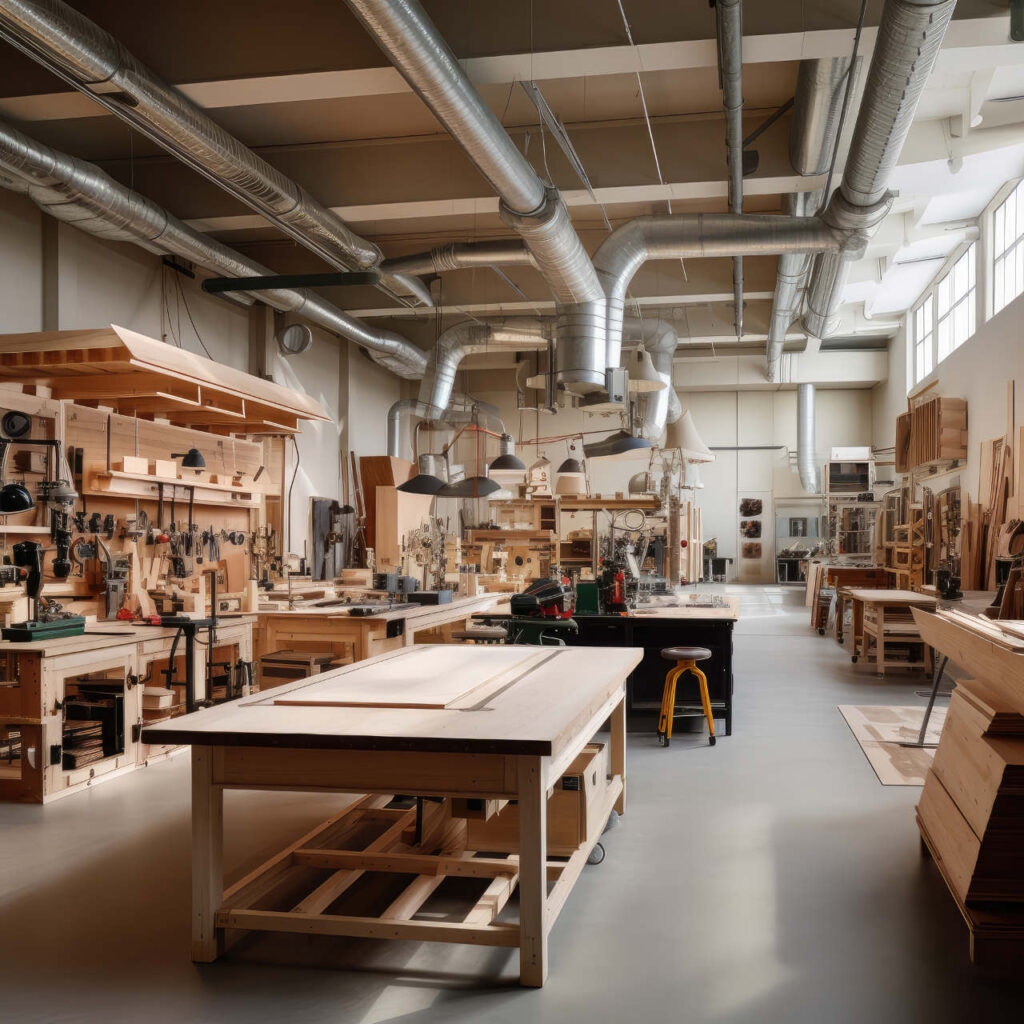
Local Exhaust Ventilation operates on a deceptively simple principle called capture at source. Instead of letting dust and fumes disperse into the workplace air and then trying to clean the entire room, LEV captures contaminants right where they're generated and removes them before they can spread.
This targeted approach is fundamentally different from general ventilation. General ventilation simply dilutes contaminated air by mixing it with large volumes of clean air. It's like trying to fix a leaking pipe by opening all the windows—you might reduce the concentration slightly, but the leak continues. LEV is like fixing the pipe itself. You stop the problem at its origin.
The effectiveness of LEV depends on creating airflow with sufficient speed to overcome the natural movement of the dust or fume cloud. Capture velocity is the air speed at the hood opening needed to draw contaminants into the system. Different processes require different capture velocities:
Professional system design calculates these requirements precisely for each application.
HSG258 defines five components that must work together for effective extraction. Understanding these components helps you evaluate proposals and maintain systems properly.
1. The Hood
The hood is where contaminants enter the system. Hood design and positioning are absolutely critical because they determine capture effectiveness:
2. Ducting
Ducting transports contaminated air from the hood to the filter. Ducts must maintain adequate transport velocity to keep particles suspended. If velocity drops too low, particles settle inside the duct, creating blockages that eventually choke the system:
Ductwork must be smooth internally to minimize friction. Sharp bends create turbulence and pressure loss. Material selection matters—abrasive dusts require wear-resistant materials, sparking processes require earthed metal ducts.
3. Air Cleaners Or Filters
Air cleaners remove contaminants before air is discharged:
4. The Fan
The fan generates the negative pressure that pulls air through the entire system. Fans must be sized to overcome all resistance—from the hood, through every meter of ductwork, through the filter, and out the discharge. As filters load with dust, resistance increases. Properly specified fans maintain adequate airflow even when filters are partially loaded.
5. Discharge Or Exhaust
Discharge safely releases cleaned air. Most systems discharge outdoors, positioning outlets away from windows, doors, and air intakes to prevent re-entry. Where filtration efficiency is extremely high and risk assessment permits, some systems recirculate cleaned air back into the workspace, saving heating or cooling energy.
Here's the critical fact that determines whether your extraction system succeeds or fails. Capture efficiency drops exponentially with distance from the contaminant source:
This relationship means hood positioning is absolutely necessary. Ideally, place hoods within 30 centimeters of the source. Enclosing the process, even partially, dramatically improves capture while reducing required airflow. A three-sided enclosure with downdraft might need only a quarter of the airflow required by an open extraction arm positioned the same distance away.
"Operator behavior reveals design flaws. Watch your workforce. If they push hoods aside because they obstruct their work, your system is failing regardless of its technical specifications."
Effective hood design accounts for how people actually work—their movements, their sight lines, their need to access materials and operate equipment. Professional design balances optimal positioning for capture with practical usability. A hood that gets in the way will be moved, and an unused hood provides zero protection.
Extraction systems aren't commodities you can order from a catalog based solely on price and delivery time. Different processes, contaminants, and workplace layouts demand specific answers. Buying the wrong system wastes money and leaves your workers exposed.
Effective selection starts with understanding your specific situation:
Professional assessment by LEV specialists is necessary. They'll observe your processes, identify all contaminant sources, calculate required capture and transport velocities, and design systems that balance effectiveness with energy efficiency and usability. LEV Tec Solutions provides this expert assessment across all industrial sectors, delivering site-specific answers designed for your operational needs and space constraints.
Mobile Or Portable Extraction Units
Self-contained systems on wheels with flexible extraction arms and built-in filtration. They excel in versatility—perfect for maintenance work, occasional welding tasks, or small workshops where work locations vary. A single portable unit can serve multiple workstations. However, their capacity is limited. They suit light-duty applications but can't handle high-volume continuous processes.
Fixed Extraction Arms
Mount permanently to walls, benches, or booms. Connected to centralized filtration and ducting, they offer larger operating radius than portable units and handle heavier-duty applications. They're ideal for dedicated workstations like welding bays or chemical handling areas where processes happen in consistent locations.
Downdraft Benches
Workbenches with perforated surfaces that pull air downwards. They're exceptionally effective for work performed on the bench surface—grinding, fettling, deburring, powder weighing, solvent cleaning. The downward airflow draws dust and fumes away from the operator's breathing zone immediately as they're created.
On-Tool Extraction
Provides the most effective source capture by integrating extraction directly into handheld power tools. Small, high-velocity extraction hoods attach to sanders, grinders, and saws, capturing dust at the instant it's generated before it becomes airborne. This approach requires high-vacuum extraction units connected via flexible hoses, but the capture effectiveness is unmatched.
Extraction Booths And Enclosures
Contain entire processes within partial or full enclosures. Paint spray booths, powder coating booths, and grinding booths maintain controlled airflow that draws all contaminants away from operators and into filtration systems. These are required for high-volume contaminant generation.
Centralized Extraction Systems
Serve large facilities with multiple extraction points. A single large dust collector and fan connect through extensive ductwork networks to numerous hoods throughout the plant. These systems are common in large woodworking shops and metal fabrication facilities, offering efficiency through shared infrastructure.
Metal Fabrication And Welding Operations
Metal fabrication demands extraction that handles hot fumes and gases:
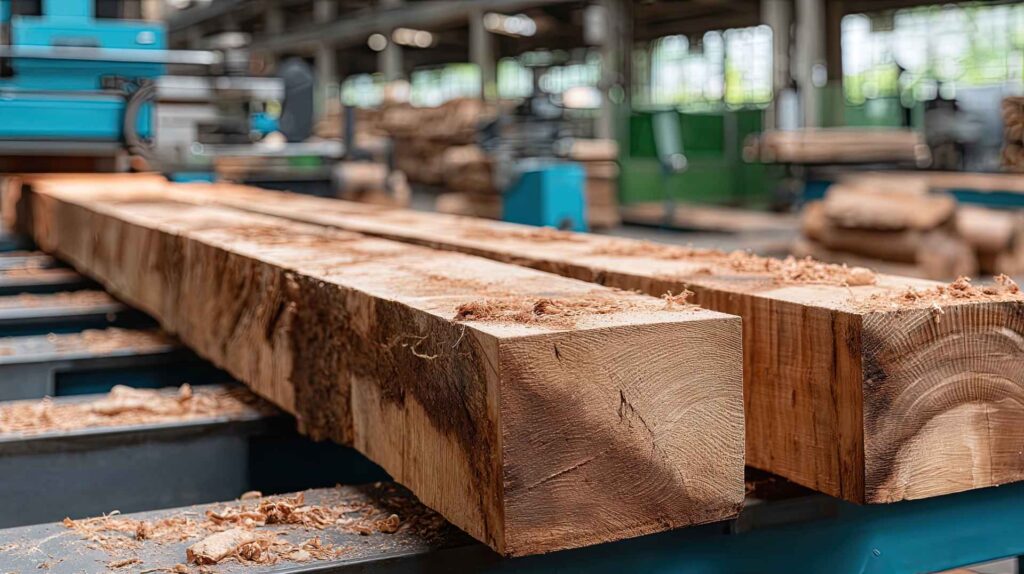
Require high-volume dust collection systems handling large quantities of chips and dust:
Generates respirable crystalline silica demanding high-efficiency filtration:
Need exhaust extraction for tailpipe fumes:
Use fume cupboards and localized extraction for powder weighing and solvent handling:
Containment and precise airflow control protect operators from potent chemical exposures
HEPA filtration and carbon filters remove fine particulates and vapours
Managing flour, sugar, or grain dust need systems that address both health hazards and explosion risks:
Contaminant Properties
Drive system specification:
Matter equally:
Imposes practical constraints:
Include:
Installing an extraction system completes only the first phase. Systems naturally degrade over time—filters clog, fan belts wear, gaskets leak, ducts accumulate deposits. COSHH Regulation 9 explicitly requires that LEV systems be maintained in "efficient state, efficient working order, and good repair." This isn't a suggestion. It's a legal obligation with serious consequences for non-compliance.
Effective protection requires both ongoing maintenance and formal verification. Day-to-day upkeep prevents minor issues escalating into failures. Periodic professional testing confirms the system still provides adequate control. Together, these practices maintain continuous compliance and worker protection.
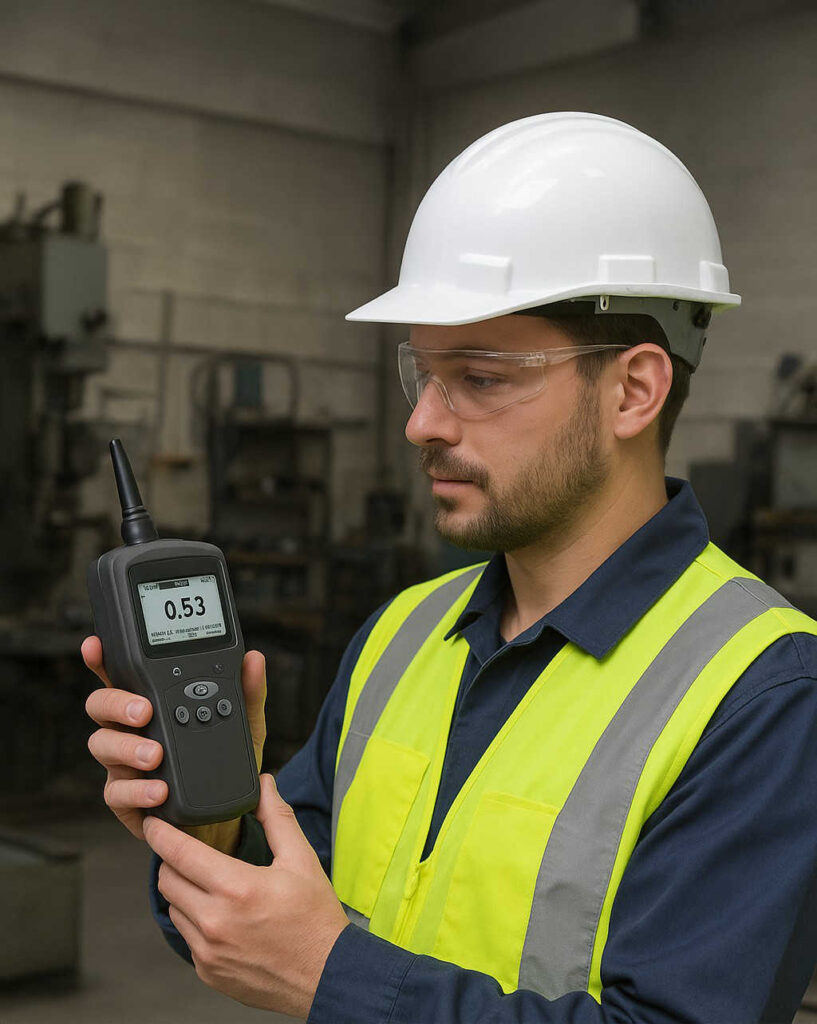
COSHH mandates that LEV systems undergo a Thorough Examination and Test (TExT) at least every 14 months. For certain high-risk processes, this interval is shorter. This is statutory—skip it and you're breaking the law.
The TExT must be performed by a competent person. Competence means possessing the necessary knowledge, training, experience, and skills to properly assess LEV system performance. The BOHS P601 qualification has become the recognized standard demonstrating LEV testing competence in the UK.
The examination involves:
Non-compliance carries significant consequences:
The British Occupational Hygiene Society (BOHS) is the chartered body for occupational hygiene professionals. The BOHS P601 certificate, titled "Controlling Airborne Contaminants: Principles and Practice of Local Exhaust Ventilation," is a rigorous technical qualification proving competence in LEV.
P601 training covers:
The course is built directly on HSG258 standards. Candidates must pass both written and practical examinations demonstrating they can accurately measure system performance and interpret results.
P601-qualified testers bring objective, professional assessment independent of equipment suppliers. They understand how different processes and contaminants affect system requirements. They can identify problems and recommend workable fixes.
LEV Tec Solutions employs BOHS P601-qualified engineers for all statutory testing, confirming your examinations meet the highest professional standards. This expertise extends throughout the design, installation, and maintenance process, delivering complete clean air answers that maintain compliance and protect your workforce.
Waiting 14 months between professional examinations isn't sufficient. Systems need regular attention to maintain performance throughout the testing cycle.
Catch obvious problems early:
Keeps systems running optimally:
Provides invaluable history:
Addressing minor issues promptly prevents escalation. Small air leaks around joints reduce system performance. Partial blockages increase resistance and energy consumption. Worn fan belts slip, reducing airflow. These problems worsen if ignored, eventually causing system failure at the worst possible time.
Effective dust and fume extraction delivers substantial business benefits that extend well beyond avoiding HSE enforcement. These systems represent strategic investments with measurable returns across multiple dimensions.
Protecting workforce health reduces costs throughout the employment lifecycle:
Productivity gains appear in multiple ways:
Protect your business from serious threats:
| Risk | Impact | Cost |
| HSE enforcement actions | Operations disrupted, reputation damaged | Variable |
| Improvement notices | Expensive remedial work within tight deadlines | £5,000-£50,000+ |
| Prohibition notices | Work stops immediately | Thousands in lost production per day |
| COSHH breach fines | Court-imposed penalties | Up to £20,000 per offense (magistrates) or unlimited (Crown Court) |
| Civil litigation | Employee occupational disease claims | £100,000-£500,000+ per case |
Delivers tangible value:
Housekeeping costs drop dramatically when you capture contaminants at source:
Energy efficiency improves with modern extraction systems:
Dust and fume extraction stands as both a legal imperative under COSHH and a moral obligation to protect the health of people who keep your business running. Thousands of UK workers still develop occupational lung diseases every year because airborne contaminants weren't adequately controlled. Many of these diseases are irreversible. Some are fatal. All are preventable with proper extraction systems.
Effective LEV requires professional expertise from design through maintenance. Off-the-shelf approaches fail because every workplace, process, and contaminant presents different challenges. Systems must be designed according to HSG258 principles, capturing contaminants at source before they reach breathing zones. They need correct specification of all five components working in harmony. Installation must be professionally executed. Commissioning must establish performance baselines against which future testing can compare.
Ongoing performance depends on rigorous maintenance and statutory testing by competent persons, particularly those holding BOHS P601 qualifications. The 14-month TExT requirement isn't bureaucracy—it's the verification mechanism confirming your systems continue protecting workers as designed. Between tests, regular maintenance and operator checks prevent performance degradation.
The business case for proper extraction extends far beyond compliance. Healthier workforces are more productive and less expensive. Avoiding enforcement action and litigation protects your business from potentially catastrophic costs. Asset protection, reduced housekeeping, and energy efficiency deliver measurable returns. Clean air isn't an optional extra—it's a fundamental requirement for sustainable business operations.
"Evaluate your current systems honestly. When did they last undergo thorough examination by a BOHS-qualified engineer? Do they follow HSG258 standards? Can you see or smell contaminants escaping?"
If you're uncertain about your extraction effectiveness, professional assessment is necessary. LEV Tec Solutions specializes in comprehensive LEV assessment, design, installation, and statutory testing across all industrial sectors, delivering specific clean air answers that protect your people while simplifying COSHH compliance.
COSHH Regulation 9 requires thorough examination and test at least every 14 months. Some high-risk processes demand more frequent testing—check guidance specific to your industry. The test must be conducted by a competent person, ideally holding BOHS P601 qualification. However, routine maintenance checks should happen far more frequently—daily operator checks and monthly or quarterly scheduled maintenance keep systems performing properly between statutory tests.
COSHH requires testing by a "competent person" with necessary knowledge, training, experience, and skills. BOHS P601 ("Controlling Airborne Contaminants: Principles and Practice of Local Exhaust Ventilation") is the recognized UK qualification demonstrating LEV testing competence. P601-qualified examiners understand HSG258 standards, proper measurement techniques, and regulatory requirements. Always ask for evidence of qualifications and relevant experience before engaging testing services. Independent testers provide objective assessment free from supplier conflicts of interest.
No. COSHH's hierarchy of control explicitly requires engineering controls like LEV before resorting to PPE. Respiratory protection sits at the bottom of the hierarchy as a last resort or supplementary measure only. LEV provides collective protection for everyone in the vicinity and doesn't depend on individual compliance. Respirators are uncomfortable, impede communication, require fit testing and maintenance, and compliance is never perfect. The HSE consistently enforces this principle—relying primarily on PPE when effective engineering controls are reasonably practicable is non-compliant.
Watch for visible dust escaping or fumes not being captured during normal operations. Check that your statutory TExT is current—within the last 14 months—and the system passed. Monitor pressure gauges or airflow indicators if your system has them. Look for settled dust near extraction points, which indicates capture failure. Listen to operator complaints about dust or fume exposure—they experience the problems directly. Check filter condition and collection bins. If you're uncertain, engage a BOHS-qualified assessor for professional evaluation rather than assuming everything is working.
HSG258 is the Health and Safety Executive's published guidance document titled "Controlling airborne contaminants at work." It's the comprehensive technical manual that defines proper LEV design, installation, testing, and maintenance—essentially the standard everyone must follow. BOHS P601 is a professional qualification that certifies an individual has been trained and examined in LEV principles based on HSG258. P601-qualified professionals demonstrate competence to design, test, and assess LEV systems according to HSG258 standards. Think of HSG258 as the rulebook and P601 as proof someone has studied, understood, and been tested on those rules.
Independent LEV Testing Specialists No Installation Sales
LEV Tec Solutions, 71-75 Shelton Street, Covent Garden, London. WC2H 9JQ
| Company VAT No: 497525247 | ICO Registration Number: ZC192661 | Cookie Policy | Privacy Policy
